ʻAlalā
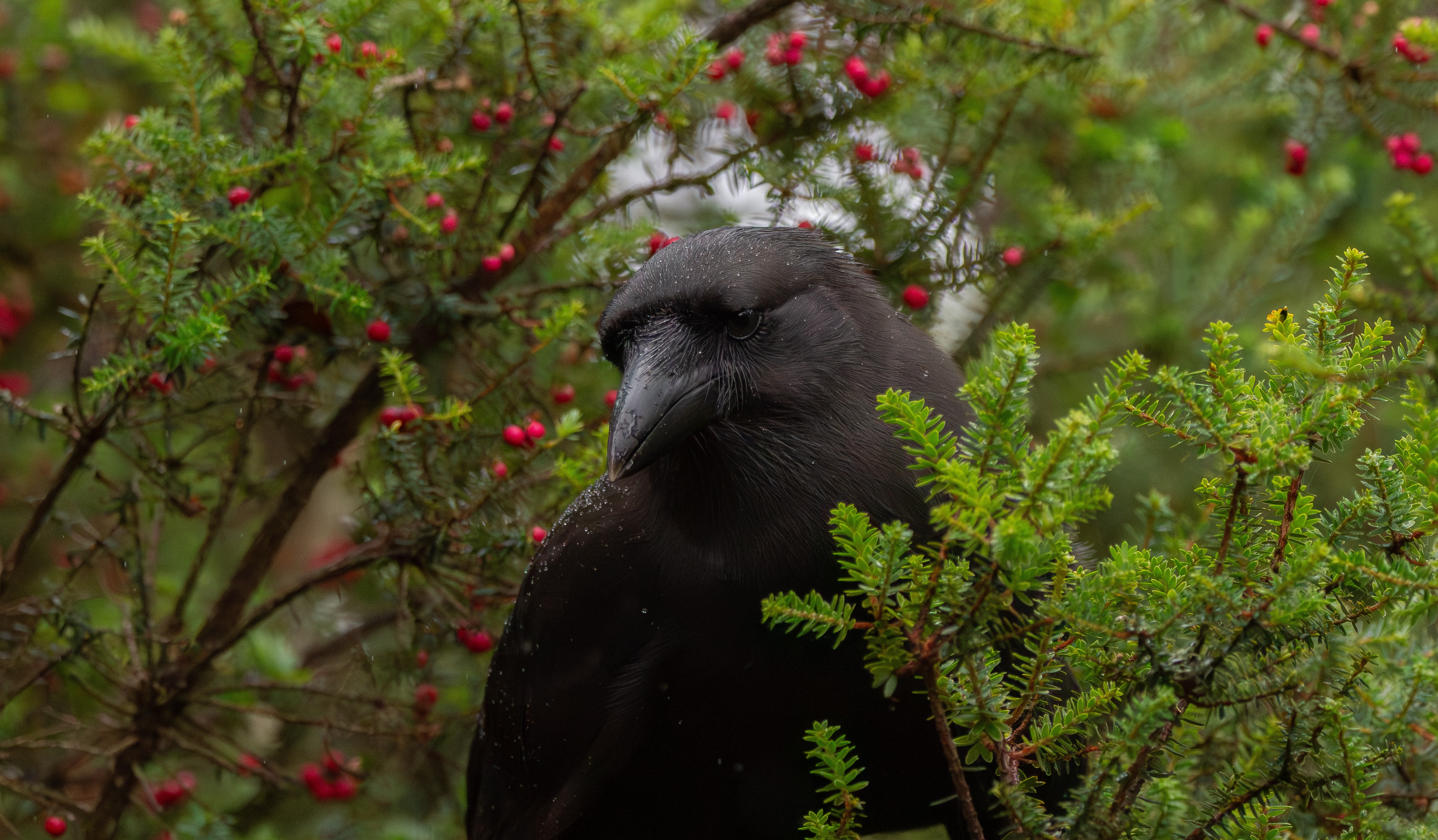
Hawaiian crow; Corvus hawaiiensis
Conservation Status:
Extinct in the wild
Diet:
Fruit, insects, rodents, birds
Habitat:
Historically 1,000ft – 8,000ft
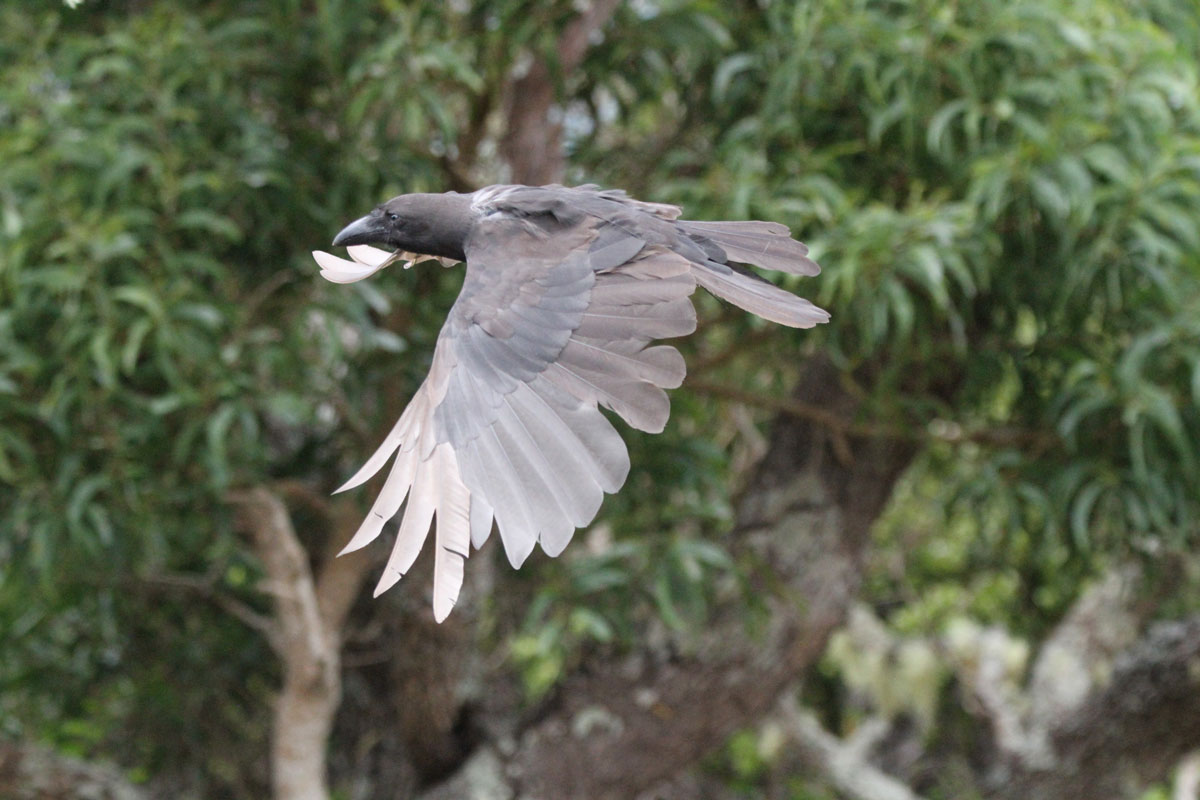
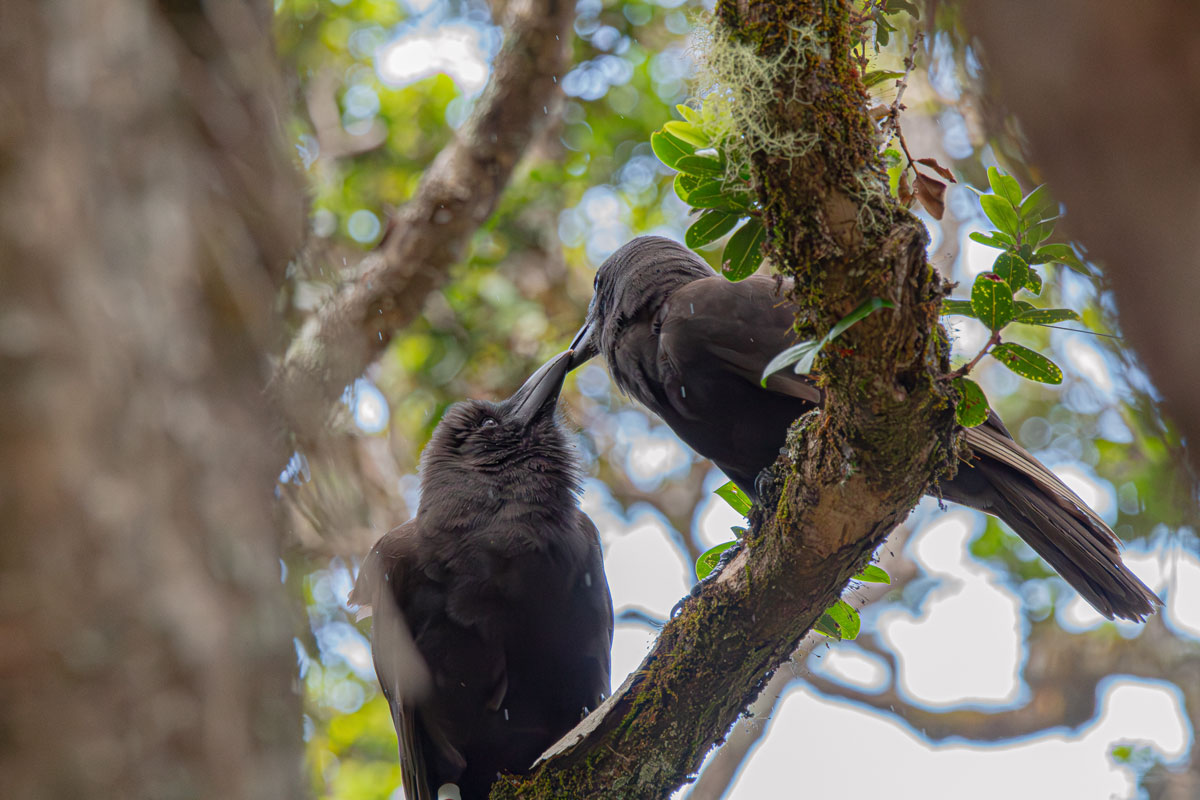
Description
‘Alalā do not exist anywhere else on the planet and evolved with the plants, animals, and culture of Hawaiʻi. ʻAlalā are the sole surviving member of a remarkable group of five endemic corvid species once found on at least four of the Hawaiian Islands.
ʻAlalā were known to eat over 30 species of native fruits in the forests of Hawaiʻi Island, making them important seed dispersers for native plants. As an omnivore, their diet also includes nectar, flowers, insects, spiders, and dead animals. They are the largest and one of the most charismatic and culturally significant of Hawaiian forest birds. Very intelligent and by far the loudest birds in the forest, ʻalalā make incredible human-like cries, screams, and moans.
As biologists noted a steady decrease in the wild ʻalalā population through the 1970s and 1980s, a captive breeding program was initiated to prevent total species extinction. In 2002, the last two wild birds were seen in a south Kona forest on Hawaiʻi Island. The ʻAlalā Project, a conservation partnership, fosters continued captive breeding activities and efforts reintroduce/rewild the species back onto the landscape.
Life History, Distribution, Habitat
ʻAlalā are social birds that typically traveled in family groups. They live as long as 18 years in the wild and up to 28 years in captivity, forming lifelong social bonds with each other. Pairs typically mate for life, producing 2-4 eggs per clutch. Immature birds remain with their parents for about 8 months. The young have blue eyes that transition to brown in adulthood.
On Hawaiʻi Island, ʻalalā were documented to utilize ‘ohiʻa- koa dominated forests. They are important seed dispersers for forest regeneration, known to consume over 30 species of native fruits. Loss of healthy native forest habitat and introduced predators and disease contributed to ʻalalā population decline in the wild.
Conservation Efforts
In 2002, the last two fully wild birds were seen in a south Kona forest on Hawaiʻi Island. Destruction of forest habitat, introduced predators like feral cats and rats, and introduced disease brought this iconic species to the brink of extinction. The ʻAlalā Project, a conservation partnership, fosters continued captive breeding activities and efforts reintroduce/rewild the species back onto the landscape.
To learn about The ʻAlalā Project and ongoing collaborative efforts to restore Hawaiʻi’s native crow to the wild, click here.
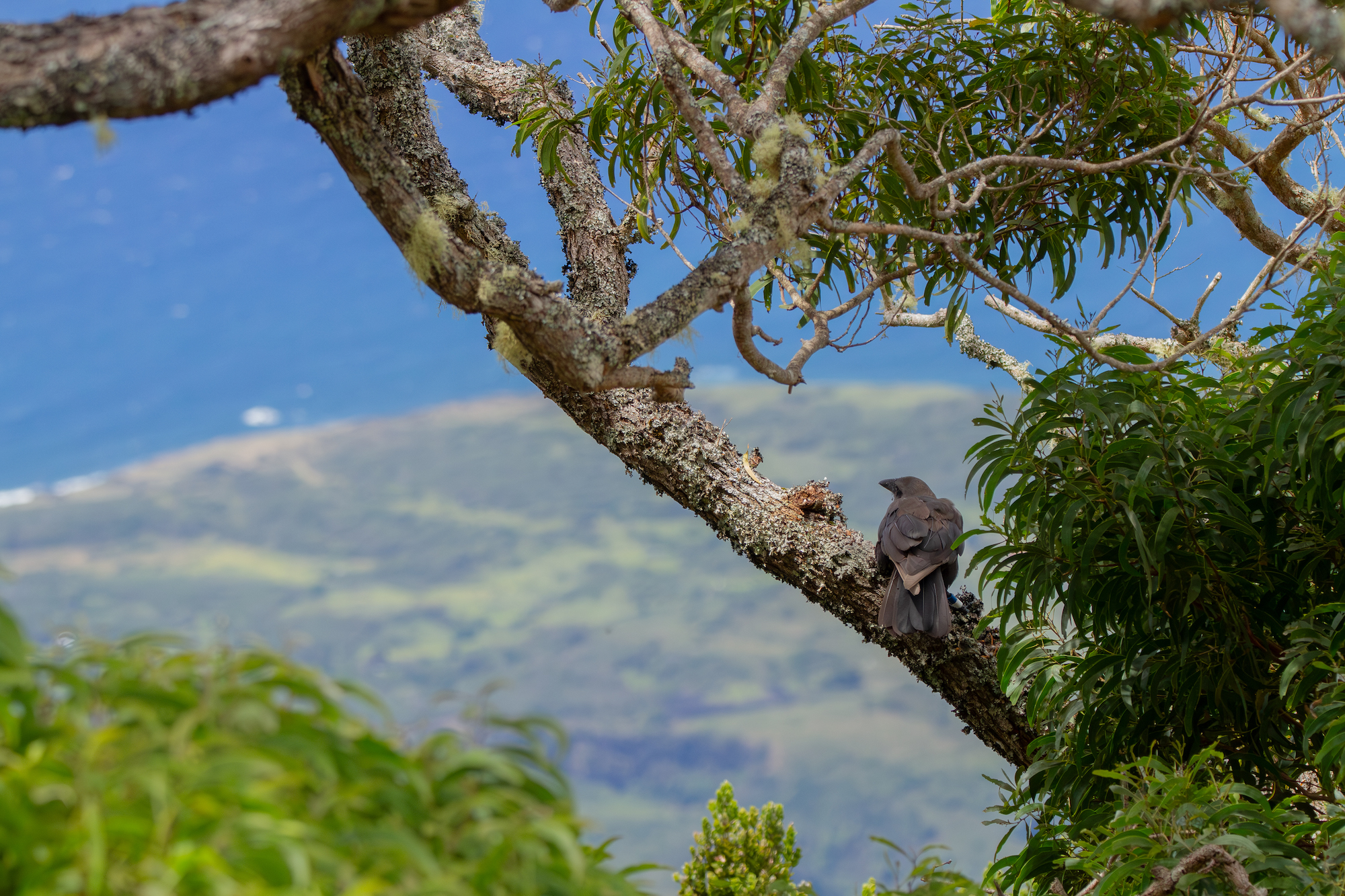
The ʻAlalā Project began recovery work on Hawai‘i Island. In 2021, the Maui Forest Bird Recovery Project joined the partnership to expand efforts to Maui Nui. A major milestone came in 2024 with the release of five young ʻalalā onto high elevation forest on the slopes of Haleakalā, Maui. The cohort of five birds continues to thrive on the landscape and is monitored daily by Maui Forest Bird Recovery Project field biologists. Over 100 ʻalalā are protected in San Diego Zoo Wildlife Alliance’s conservation center aviaries on Maui and Hawaiʻi Islands.
Stories from the Field
Five young ‘alalā are making healthy behavioral strides in the forests of Maui. The intrepid captive-reared ‘alalā have been flying free on the slopes of Haleakalā for over a full year now.
Some of our ʻalalā monitoring team have written personal accounts of their time on the landscape with these magnificent birds. We continue with a blogpost from field biologist, Idangie Sein.
The release of this cohort in Maui Nui is a significant milestone in a longstanding ‘alalā recovery effort. Extinct in the wild since 2002, the recovery effort aims to return this ecologically and culturally important species to its forest home.
Cultural Significance
ʻAlalā play crucial roles both ecologically and culturally within the Hawaiian landscape.
ʻAlalā are sacred in Hawaiian culture, featuring prominently in the kumulipo (Hawaiian creation chant) and widely regarded as ʻaumākua or spiritual guardians.
Hawaiian culture embraces a shared ancestry among birds, people, plants, other animals, the ocean, and land. By returning ʻalalā to the wild, we are welcoming home a family member that has been away for a long time; fulfilling our kuleana, our reciprical responsibilities on Hawaiian Islands.
He ʻalalā, he manu leo nui
The ʻōlelo noʻeau (proverb) above translates to “The ʻalalā, the bird with the big voice”.
ʻAlalā have a wide variety of moans, cries, and cawing calls. They are by far the loudest bird in the forest. By definition, their name ʻalalā reflects their loud voice. It is defined as the cry of a child, the person who would be calling out commands for the chief during battle, or a style of chanting with a tremor to the voice and prolonged vowels. Hear some of the many vocalizations of ʻalalā.